
Episodes
A Halloween Special: Two Scary Stories
October 26, 2026 · 2348
No case this week. For Halloween, Tali and Stephanie each wrote an original horror story, and we’re reading them to you. Two stories. Two buildings. Two sets of rules.
Sitting Up (written and read by Tali) It’s 1987. A home health nurse takes on a new patient in Pell’s Crossing: Miss Iris Ashby, 96, who lives alone in a 41-room house at the top of the hill. Every house in town faces the river. That means every house has its back to the Ashby place. Iris has rules. Don’t go above the second floor. Keep the lamp lit. Never come up the hill after dark. Then Iris dies, and the town needs someone to sit up with her until morning. It has to be someone from away.
No Recording Permitted (written and read by Stephanie) Two struggling podcasters land the scoop they’ve been waiting for. They get first access to the Rubaker Hotel, an Arkansas resort turned fake cancer retreat where human remains were found on the grounds decades ago. The caretakers mail them the rules. Audio only. Stay on the path. Don’t open the bathing chamber. Stay out of the cellar. Only one of them reads the whole letter.
Both stories are fiction. Pell’s Crossing and the Rubaker Hotel are not real places. Please don’t go looking for them.
Amityville: The DeFeo Murders and the Truth Behind The Amityville Horror
October 19, 2026 · 4059
In November 1974, Ronald “Butch” DeFeo Jr. walked through his family’s home at 112 Ocean Avenue in Amityville, New York, with a hunting rifle and shot his parents and four siblings as they slept. Thirteen months later, George and Kathy Lutz moved into the same house with three kids and a dog. They lasted 28 days.
What they said happened next became The Amityville Horror: a bestselling “true story,” a hit movie, and more than 40 films with Amityville in the title. Flies in December. Green slime oozing from the walls. Red eyes in the window. A pig named Jodie.
This week, we go into that house twice. First in 1974, to tell the story of the DeFeo family and the night they were killed. Then in 1975, to walk through everything the Lutzes said happened inside. After that, we hold it all up against the paperwork: the court filings, the weather records, the priest’s sworn affidavit, and the defence lawyer who told People magazine the whole story was created over many bottles of wine.
In this episode:
- The DeFeo family, their mob connections, and Butch’s violent home life
- The suspicious robbery and the fight just days before the murders
- November 13, 1974, and the question people still ask: why didn’t anyone wake up?
- Butch’s confession, his insanity defence, and the trial
- The Lutz family’s 28 days at 112 Ocean Avenue
- Ed and Lorraine Warren, the séance, and the “ghost boy” photo
- Jay Anson’s book, the 1979 movie, and the lawsuits that followed
- William Weber’s hoax claim and what the records actually show
- Butch’s ever-changing stories from prison
- What the Lutz kids say now and what became of the house
Bad News, Good News | Nidal Hasan’s execution date, The Richneck Bodycam + 3 Cold Case Breaks
October 14, 2026 · 909
newly released bodycam footage shows the moments after a six-year-old shot his teacher at richneck elementary. three men are found guilty in the murders of two australian brothers and their american friend on a surf trip in baja. and the fort hood shooter has an execution date. this is bad news good news from murders and minivans. tali covers the week’s crime news. stephanie brings the good news.
in this episode: the richneck elementary bodycam, sealed for more than three years abby zwerner’s $10 million verdict and where she is now guilty verdicts in the baja killings of callum and jake robinson and carter rhoad nidal hasan’s firing squad execution, set for december 3 at fort hood stephanie’s good news: a discarded water bottle leads to an arrest in hillary hellewell’s 1985 murder in newport, rhode island. a grand jury indicts a suspect 20 years after chynna and blake dickus were killed in franklin, indiana. and a 16-year-old found in an oakland hotel in 1969 is identified as joann yvonne burdick.
content note: this episode discusses murder, sexual assault, violence against children, a school shooting, a mass shooting, and capital punishment.
all allegations are allegations. william morton and michael jerome james have been charged and are presumed innocent. taylor morris teaford has been named a potential suspect only. he has not been charged and his whereabouts are unknown. the three men convicted in ensenada have not yet been sentenced.
Denise Huskins & Sherri Papini | Two Truths & A Lie
October 12, 2026 · 2708
In March 2015, Denise Huskins was taken from her boyfriend's home in Vallejo, California, held for two days, and assaulted. When she came home, police held a press conference calling it a hoax, and the media named her the real Gone Girl. The only reason anyone believed her was that her kidnapper attacked another family and left his phone behind.
A year and a half later, a Redding mom named Sherri Papini vanished on a jog. She turned up on Thanksgiving morning, chained and branded, and said two Hispanic women had taken her. Law enforcement believed her for more than five years. The women never existed.
This week, Tali puts the two cases side by side. We cover the interrogation that treated Aaron Quinn as a murderer, the kidnapper's emails begging police to clear Denise's name, and the FBI agent with a conflict of interest. Then there are the cold-case confessions that came out in 2024 and 2025, including a ladder found in a ravine nine years later and a victim who waited 32 years to be believed. And we follow Sherri Papini from the side of I-5 to a federal courtroom, and to the brand new version of events she's telling now.
Bad News, Good News | Christa Pike, Mamta Bhatt, Ken Urker, The Plague & More
October 7, 2026 · 1002
this week on bad news good news, tali brings the bad news and stephanie balances it out.
caleb flynn has been sentenced. a jury convicted the former american idol contestant on all nine counts in the murder of his wife, ashley flynn. the judge ordered him to serve 16 years for firearm specifications and evidence tampering before his life sentence begins. statements from his two young daughters were read in court. ashley's father said the family forgives him and asked for the harshest sentence possible. flynn still says he's innocent. his attorney plans to appeal.
the cornell 7 case has a new prosecutor. governor kathy hochul removed the local district attorney and appointed new york attorney general letitia james as special prosecutor. james says it's now an active criminal investigation. no one has been charged.
ken urker, gypsy rose blanchard's partner and the father of her daughter aurora, was found dead in his louisiana home on his 34th birthday. the sheriff's office is investigating it as drug related. gypsy has said it was an overdose. officials say there's no evidence of foul play so far, and no official cause of death has been released.
christa pike survived her execution. tennessee tried to put her to death on september 30 for the 1995 murder of her classmate colleen slemmer. after two doses of pentobarbital and more than two hours, she was still alive. she was hospitalized in critical condition. the governor has halted executions and ordered an outside review.
a lab technician at a plague research institute in siberia has died of a suspected pneumonic plague infection. nearly 200 people are under observation. russia hasn't confirmed it was plague.
naresh bhatt's murder trial has started in virginia. his wife, mamta kafle bhatt, a 28-year-old pediatric nurse and mother, disappeared in 2024. her body has never been found. he has pleaded not guilty.
and simon andriesz, a british former banker who gave house oversight lawmakers emails between howard lutnick and jeffrey epstein, has died. his death was reported as a suicide. there is no evidence connecting it to his whistleblowing, lutnick, or epstein.
then stephanie brings the good news. the scientists behind optogenetics won the 2026 nobel prize in medicine. they borrowed a light-sensitive protein from algae to switch brain cells on and off with light. lulingu, a gorilla rescued from traffickers as an 18-month-old orphan, was released into virunga national park in 2024. she has now given birth in the wild, to a baby her endangered grauer's gorilla group badly needed. and nicole and gary wordsworth have fostered 59 dogs for battersea over the past 15 years.
learn more: grace gorillas sanctuary: https://gracegorillas.org/ gorilla doctors: https://www.gorilladoctors.org/
content note: this episode discusses death, overdose, and suicide. if you're struggling, call or text 988 in the us or canada, or reach out to your local crisis line.
all allegations are allegations. naresh bhatt has pleaded not guilty. no one in the cornell case has been criminally charged. no official cause of death has been released for ken urker.
Thomas Randolph | The Black Widower
October 5, 2026 · 2527
On the evening of May 8th, 2008, Sharon Randolph and her husband went out for dinner and a movie. Mother's Day was that Sunday. She was forty-seven years old and she loved going to the theatre.
Just after 9:30 that night, her husband called 911 and told the dispatcher that a masked intruder had shot his wife in the hallway of their home, and that he had shot the intruder five times.
When Las Vegas Metro arrived, the scene read cleanly. A dead woman. A dead man in a ski mask with a bag of jewellery beside him. A husband who had reached his gun a moment too late.
The dead man was not a stranger. He was the family handyman.
This week we go through the case of Thomas Randolph, the man the press would eventually call the Black Widower. He was married six times. Four of those wives are dead. He has been convicted of killing exactly one of them and the story of how the law handled the other three is, in some ways, more interesting than the murder.
In this episode:
- The 1986 death of Becky Gault in Utah, the half-million-dollar insurance payout, and the handyman who went to the police
- The felony Randolph pleaded guilty to while awaiting trial for her murder, and the acquittal he sealed afterwards
- Glen Morrison, who was asked to kill one of the wives and stage it as a robbery, and the reason he said no
- The forensic details that broke the 2008 story apart: the shell casings in the wrong place, the ski mask with no blood on it, and a neighbour who heard gunshots twenty minutes before anyone called
- The video walkthrough Randolph volunteered to make, and the sixteen years he has spent trying to take it back
- Why the Nevada Supreme Court threw out his conviction and death sentence in 2020, and why we think that ruling was correct
- The 2023 retrial that convicted him anyway, on much less
- The appeal the court rejected this September
Follow us on Patreon, Instagram & Facebook!
The Murders of Ella Bennett & Elizabeth Olten
September 28, 2026 · 3730
On Super Bowl Sunday 2007, four-year-old Ella Bennett was killed in her bed in Abilene, Texas. The person responsible was her thirteen-year-old brother, Paris. He has said Ella wasn't his target. Their mother was.
Two years later in St. Martins, Missouri, nine-year-old Elizabeth Olten walked to a friend's house and never came home. Fifteen-year-old Alyssa Bustamante had dug a grave days earlier. She told investigators she wanted to know what killing felt like.
In this episode, we look at both cases side by side. We cover:
- How Paris Bennett set up the night he killed his sister, and the 911 call that followed
- Why intelligence and empathy are not the same thing
- What researchers mean by psychopathic traits, and why that label is so hard to apply to children
- Nature versus nurture and the developing teenage brain
- Alyssa Bustamante's planning, her journal, and her guilty plea
- Sentencing, parole, and what rehabilitation means when the victim's family is still living with the crime
- Ella and Elizabeth, and who they were before their names became case files
This episode discusses the murder of young children, including violence and self-harm. Please listen with care.
The Unabomber: What Harvard Actually Did To Ted Kaczynski
September 21, 2026 · 4118
17 Years. 16 Bombs, 3 dead, $50 million dollars and 150 full time investigators, and at the end of it a 53 year old man in a 10x12 foot cabin with no electricity and a lot of books.
everybody knows the outline. what most people know beyond it is a story about Harvard, a Psychologist, and the CIA. that story is about to get a Netflix film. so this week we went and did a deep dive...
what we found is that the experiment was real, it was genuinely unethical, and the claim that it created the Unabomber is contested by nearly everyone who would know. including a man who sat in the same study. including Henry Murray's biographer, who spent 20 on him. including Ted Kaczynski, who had every reason in the world to take the excuse and turned it down.
and underneath all of it there is a much quieter story about a boy who was ordinary until an iq test moved him up two grades, a father who would not listen to the teacher who tried to stop it, and a twenty four year old in a psychiatrist's waiting room in 1966 who lost his nerve and walked out into the street deciding somebody else was going to pay.
in this episode
- the code name lawful, and what actually happened at 7 divinity avenue
- henry murray, the oss, and the stress interview the harvard study was descended from
- what alston chase got right, and the rebuttals the atlantic published three months later
- whether mkultra has anything to do with any of it, and why we cannot ever know
- boundary functions, and the prize winning mathematician who had already decided to leave
- 1978 to 1995, and the people who opened the packages
- forty thousand pages of journal, two homemade ciphers, and the word experiment
- the manifesto, linda patrik, david kaczynski, and stylometry
- the insanity defence he fought harder than he fought the prosecution
- gary wright, and the word kindling
The Bend School Shooting, Michelle Parker’s Ex-Fiancé Charged, and Two 1960s Cold Cases Solved
October 21, 2026 · 640
This week on Bad News Good News, Tali brings the bad news and Stephanie balances it out.
On October 15, a 16-year-old shot through the locked doors of Silver Rail Elementary School in Bend, Oregon, and targeted a special education classroom. He killed three children, ages 5, 8, and 11, and 25-year-old teacher Meghan Lambert. A 7-year-old student and a 54-year-old teacher were critically wounded. Five-year-old Rhoam Summer is believed to be the youngest person killed in a U.S. school shooting since tracking began in the 1960s. One teacher slowed the shooter by throwing her phone at him and fighting him. A community member, identified by his family as Kaylub Giamanco, followed the shooter inside and shot him. Police say the shotgun was bought by the shooter's mother. The motive is still under investigation.
Tali also looks at how school shootings and gun laws in the U.S. compare with Canada. In Pennsylvania, Metallica Rose Harrison, 27, is charged with two counts of criminal homicide. Her husband, Charles "Chaz" Harrison, and their 3-year-old son were found stabbed to death in their room at the Great Wolf Lodge in the Poconos. Resort staff say the knives found in the room were not a type the lodge keeps. She is due in court next month.
Then Stephanie brings the good news. In November 1960, 8-year-old Gloria Kowalewicz was abducted while walking to church in Chicago. She was murdered, and her case went unsolved for 65 years. Investigators now say DNA and fingerprint evidence identified a suspect: Thomas F. McInerney Jr., a former Chicago homicide detective who died in 2006. He was never charged.
In June 1962, brothers-in-law Charles Hale, 71, and Lester McCollum, 67, were murdered on their property near Battle Ground, Washington. On October 13, the Clark County Sheriff's Office announced that preserved DNA and fingerprint evidence had identified two suspects, Barton Stebbins and Walter Stain. Both have since died. It is the oldest cold case the office has ever resolved.
And in Orlando, police have arrested Dale Smith Jr., 55, nearly 15 years after his former fiancée, Michelle Parker, disappeared. Michelle, a 33-year-old mother of three, vanished on November 17, 2011, after dropping her twins off at his home. That same day, an episode of The People's Court featuring the two of them aired. Smith is charged with second-degree murder. Police credit new evidence and advances in forensic technology. Michelle's remains have not been found.
Content note: Metallica Rose Harrison and Dale Smith Jr. have been charged, not convicted, and are presumed innocent. Thomas F. McInerney Jr., Barton Stebbins, and Walter Stain died before they could be charged, so the evidence against them will never be tested in court.
The Shafia Murders: A Family Project
September 14, 2026 · 5377
On June 30, 2009, a black Nissan Sentra was found submerged at the Kingston Mills locks on the Rideau Canal with four bodies inside: Zainab Shafia, 19, Sahar Shafia, 17, Geeti Shafia, 13, and Rona Amir Mohammad, 52. The family called Rona the girls' aunt. She was their father's first wife, in a polygamous marriage Canadian immigration knew nothing about.
Within three weeks, Mohammad Shafia, his wife Tooba Yahya, and their 18-year-old son Hamed were charged with four counts of first-degree murder. A jury convicted all three in fifteen hours.
But the murders are not the hardest part of this case. The two years before them are. Teachers knew. Two separate child protection agencies were called. Police interviewed four terrified children on a street corner ten weeks before the drownings. An immigration lawyer was offered $10,000 to make one of the victims disappear from the country. A relative in Sweden was invited to help commit the crime. And three girls said out loud, repeatedly, to adults whose job it was to listen, that their father was going to kill them.
Every single time, the file was closed.
This episode traces the whole thing: Rona's diary, Zainab's Valentine's Day note, Sahar's plan to become a doctor, Geeti's request to be placed in foster care, the Google searches, the two scouting trips, the seven pieces of broken headlight that cracked the case, and the argument about what we should call these killings that is still going on today.
Mica Miller: Death of a Pastor's Wife
September 7, 2026 · 4028
mica miller: the trial that isn't about her death
mica miller was found dead on april 27, 2024, at lumber river state park in robeson county, north carolina, about seventy miles from her home in myrtle beach. she was 30. the robeson county sheriff's office determined she died of a self-inflicted gunshot wound. the north carolina medical examiner ruled her death a suicide. investigators said there was no evidence her estranged husband was involved in it.
that is where most cases end. this one didn't.
on december 18, 2025, a federal grand jury in columbia indicted john-paul miller, 46, pastor of solid rock church in myrtle beach, on one count of cyberstalking and one count of making false statements to federal investigators. the indictment alleges a pattern beginning in november 2022 and running until the day mica died.
what the indictment alleges
- repeated unwanted communications, including more than fifty contacts in a single day
- tracking devices placed on her vehicle
- a nude photograph of her posted online without her consent
- interference with her finances and daily activities
- damage to her car tires
prosecutors also say miller admitted hiring a private investigator to keep mica from buying a firearm.
timeline
- november 2022: the alleged harassment begins, per the indictment
- april 27, 2024: mica miller is found dead at lumber river state park
- may 2, 2024: the death is first reported publicly
- may 6, 2024: the robeson county sheriff's office refers the matter to the u.s. attorney's office in south carolina
- 2024: mica's family settles a civil suit against john-paul miller
- june 1, 2025: john-paul miller remarries
- december 18, 2025: federal grand jury returns a two-count indictment
- january 12, 2026: arraignment in florence, south carolina. not guilty plea, released on $100,000 unsecured bond
- august 13, 2026: judge joseph dawson iii grants a continuance, moving the case to the october 2026 term
where it stands
john-paul miller has not been charged in connection with mica's death and has denied responsibility for it. he faces a maximum of five years on the cyberstalking count, two years on the false statements count, and a fine of up to $250,000. these are allegations. he is presumed innocent unless proven guilty.
the case has been continued four times. that is not unusual in a federal prosecution with this much electronic evidence.
why this case matters beyond itself
the gap between "no evidence of involvement in her death" and a federal stalking indictment is the whole story. advocates in south carolina have used it to push for domestic violence law that recognizes coercive control, meaning patterns of surveillance, isolation, financial control, and intimidation that leave no bruises.
sources u.s. attorney's office, district of south carolina, indictment and press release, december 18, 2025. robeson county sheriff's office. north carolina office of the chief medical examiner. federal court records, district of south carolina.
The Freeway Phantom Murders
August 31, 2026 · 2956
between april 1971 and september 1972, six young Black girls disappeared from southeast washington, d.c. they were ten to eighteen years old. they were walking home from the store. going to work. going to night class. coming home from a boyfriend's house.
their bodies were found along highways in and around d.c. and maryland.
Carol Spinks. Darlenia Johnson. Brenda Crockett. Nenomoshia Yates. Brenda Woodard. Diane Williams.
at first the murders were not connected. different detectives worked different cases in a city overwhelmed by homicides. the media barely covered it. by the time investigators recognized the pattern, most of the girls were already dead.
the killer named himself. a note torn from brenda woodard's own school notebook was signed "free-way phantom." handwriting analysis determined she had been forced to write it before she died.
in this episode we go through all six cases. the phone calls made to the victims' families. the semen that was never tested. the reports of a body in the grass that police did not act on for a week. the missing shoes and shoelaces. and the two theories that were never closed: robert askins and the green vega gang. neither was ever charged.
we also talk about Romaine Jenkins, the homicide investigator who built the largest private collection of records on this case, and the reinvestigation that found what the original one lost.
the case is still open. the reward is $300,000.
more than fifty years later, no one has been charged
The Lizzie Borden Story
August 24, 2026 · 3402
On August 4, 1892, Andrew and Abby Borden were killed in their home in Fall River, Massachusetts. Ten months later, Andrew's daughter Lizzie was tried for both murders and acquitted in about ninety minutes. Nobody else was ever charged.
Everyone knows the rhyme. Almost none of it is true. The weapon was a hatchet. Abby was Lizzie's stepmother. And the autopsy records eighteen wounds to Abby and ten to Andrew, not forty and forty-one.
This episode isn't an attempt to solve it. The case can't be solved. The volume of the inquest transcript holding Lizzie's first day of testimony is lost, and Bridget Sullivan's inquest testimony is gone entirely.
What we do instead is sort every claim into four buckets and say out loud which one we're standing in: primary documents, 1892 newspapers, modern scholarship, and folklore. Then we go through the house and its bolted doors, the poisoning fear two days before the murders, the refused prussic acid, the note nobody ever found, the barn loft dust, the burned dress, and the two rulings that decided the trial.
We also follow Bridget Sullivan to Montana, and we test a 2025 book's claim to have solved the case against four people who testified under oath.
For Source Info: murdersminivans@gmail.com
Seven people in Chicago died in three days in 1982 after taking Extra Strength Tylenol laced with cyanide. Nobody has ever been charged. Every seal on your medicine bottle comes from this case.
On September 29, 1982, a twelve-year-old girl in Elk Grove Village named Mary Kellerman took a capsule for a sore throat before school. She was dead within hours. By the end of that week, six more people were dead across the Chicago suburbs, including three members of the same family who took capsules from the same bottle on the same afternoon.
It took two off-duty firefighters comparing notes on a phone call to figure out what the deaths had in common. It took a nurse named Helen Jensen going back to a victim's house and counting the capsules to prove it.
In this episode, we walk through all seven victims, the seventy-two hours it took anyone to connect them, the lot numbers that proved the bottles were poisoned after they reached store shelves, the extortion letter demanding a million dollars, and James Lewis, the man investigators spent forty years trying to charge and never could.
We also get into what happened after. Thirty-one million bottles pulled. Tamper-evident packaging on every over-the-counter product in North America. A federal anti-tampering law. The case is still open.
Victims: Mary Kellerman, Adam Janus, Stanley Janus, Theresa Janus, Mary McFarland, Mary Reiner, Paula Prince.
Source Info: murdersminivans@gmail.com
FOLLOW US! Instagram: @murdersandminivans
What Happened to Nolan Wells?
August 7, 2026 · 1241
Nolan Xavier Wells was an 18 year old wide receiver from ocean springs, mississippi, preparing for his freshman season at southwest mississippi community college. on july 4, 2026, he traveled to horn island with a large group of friends on multiple boats. the boat he rode out on took on water from a failed bilge pump and turned back early. nolan was not on it. his body was found in the water on july 6.
in this episode we walk through the full case in order: who nolan was, the geography and currents of horn island, the boat that took on water and the released sea tow distress call, the conflicting accounts of his final hours, and a 22 page timeline review that found a material gap in his last confirmed hours. we cover the multi agency search and the two competing explanations, what both autopsies found, the independent one that ruled cause and manner undetermined without excluding foul play, and the official state autopsy that is complete but sealed while prosecutors prepare a grand jury presentation. we also cover the unresolved details around his phone and keys, his clothing, and the tides, the family's legal team led by ben crump, support from tyler perry, colin kaepernick, and al sharpton, and the new two sided legal fight as three of the friends, publicly named, hire attorneys and assert their innocence while three strangers face charges for threatening people connected to the case.
this is an open case. as of recording, no one has been charged in nolan's death, the cause and manner of death remain undetermined, and the friends have publicly stated they are innocent. we report only publicly available information.
The Husband Did It (A Love Story)
August 10, 2026 · 4285
Laci Peterson was eight months pregnant when she was reported missing from her modesto home on christmas eve 2002. four months later, her body and the body of her unborn son conner washed up in the san francisco bay, just miles from where her husband scott said he had been fishing alone that day.
this episode walks through the full case. we cover the timeline of Laci's disappearance, scott's shifting story, his affair with amber frey, the wiretapped phone calls, and the evidence that led to his conviction. we also get into the 2020 ruling that overturned his death sentence and where the case stands now.
in this episode:
- who Laci peterson was and the life she and scott were building
- the events of december 24, 2002 and scott's fishing alibi
- amber frey and the affair scott was hiding
- the search, the tips, and the media frenzy that followed
- the discovery in the bay and what the evidence showed
- the 2004 trial, the conviction, and the death sentence
- the 2020 sentence reversal and the ongoing appeals
Amy Mihaljevic: The Phone Call Before the Crime
August 3, 2026 · 3553
in october 1989, ten-year-old amy mihaljevic left her school in bay village, ohio to meet a man she had spoken to on the phone. he told her that her mom had gotten a promotion. he said he wanted her help picking out a gift. she was never seen alive again.
her body was found four months later in a field in ashland county, more than fifty miles from home.
what most people don't know is that amy wasn't the only girl who got a call. other girls in the area received the same kind of pitch around the same time. some said no. some hung up. one didn't.
more than three decades later, the case is still open. the fbi still has the tip line. investigators still believe someone knows the voice on the other end of that phone.
this episode covers the call, the abduction, the search, the discovery in the field, and the details that have kept this case alive for a generation. we talk about what made amy trust him, why the phone angle still matters, and the evidence that still hasn't been matched to a name.
Casey Anthony | What the Jury Never Saw
July 27, 2026 · 3724
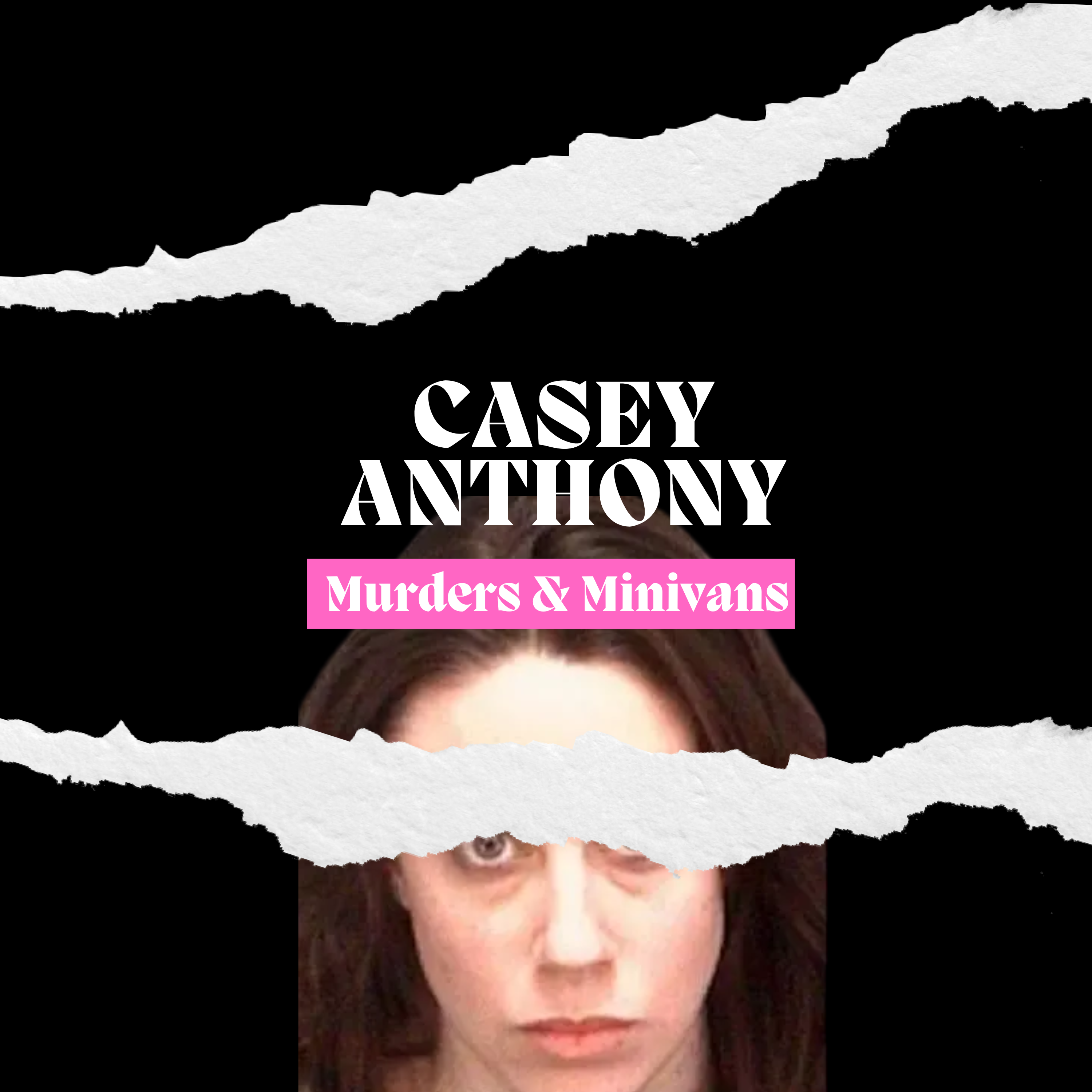
everyone remembers the verdict. almost nobody knows about the google search the jury never saw. on the last day Caylee Anthony was seen alive, someone in the anthony home searched "fool-proof suffocation" — and the state never found it, because investigators checked the wrong browser. this week: the full casey anthony case from the primary record. the 31 days, zanny the nanny, the deputy who wouldn't walk thirty yards, the chloroform number that collapsed mid-trial, and the two web sleuths who found what the state missed using free software. this isn't the story of a jury getting it wrong. it's the story of everything that never reached them.
for source info contact us at murdersminivans@gmail.com.
we're on YouTube! @MurdersMinivans
follow us on Instagram!! @MurdersandMinivans

Framed by a U.S. Marshal | The True Story Behind Netflix's A Toxic Love Story
July 20, 2026 · 3766
She spent 88 days in jail for a crime that never happened. The person who framed her was her own ex-fiancé: a deputy U.S. Marshal.
This is the true story behind Netflix's A Toxic Love Story (2026).
In 2016, Michelle Hadley was a 29-year-old grad student with a marketing job at Disney when Anaheim police arrested her for stalking, criminal threats, and six counts of attempted rape. Her bail was set at $1 million. She was facing life in prison.
The problem? She had never done any of it.
Michelle's ex-fiancé, deputy U.S. Marshal Ian Diaz, and his new wife of four months, Angela, had spent months building a fake online version of Michelle. They used her real writing style, pulled from private emails only Ian had access to. They created the "Lilithistruth" alias. They posted Craigslist ads directing strangers to Angela's home. They staged a garage attack. And they weaponized a federal badge to make local police believe every word.
The Orange County District Attorney would later call it "diabolical."
In this episode:
- The whirlwind romance and the Rockefeller Center proposal
- The Anaheim condo dispute that started everything
- The real breakup emails that became the blueprint for the frame
- Angela's history of forged sonograms, fake cancer, and impersonating Ian's other exes
- The Craigslist "rape fantasy" ads and the plan to stage a real assault
- The 17-year-old who nearly became a victim
- 88 days in jail: the death threat, the letters home, the swagger coaching
- How Michelle's parents cracked the digital evidence at their kitchen table
- Michelle's exoneration and Angela's plea deal
- The $1.795 million civil settlement that finally exposed Ian
- The federal conviction that came the same day Michelle gave birth to her daughter
Watch: A Toxic Love Story, directed by Alexandra Lacey, premieres on Netflix July 22, 2026.

The Billionaire Murders: Barry & Honey Sherman
July 13, 2026 · 4517
on a friday morning in december 2017, two real estate agents walked a couple through a mansion in north toronto. downstairs by the lap pool, they found the owners. barry and honey sherman. fully dressed, sitting upright, necks looped to a low railing with leather belts. one agent thought it was some kind of weird yoga. they had been dead for almost two days.
barry built apotex into the largest canadian-owned drug company and a multibillion-dollar fortune. he was brilliant, famously cheap, and he ran his business on lawsuits. honey was one of the most connected philanthropists in the country. together they gave away record amounts of money and made a very long list of enemies.
in this episode we go deep. the empire and the orphaned cousins who sued him. the money, the trusts, and the foundations he used like a piggy bank. the billion dollars in debt he refused to pay. the botched murder-suicide theory and the second autopsy that blew it apart. the walking man. the mystery visitor. and the six theories that are still on the table. police are now down to one detective and an ai program, and the family says it lives in fear.
we keep it direct and we keep it fair. no wild guessing, no naming names the reporting does not name.
what we get into
- how a ten-year-old counting zippers became a billionaire with a phd from mit
- the four orphaned cousins, the voided option, and the lawsuit that ended days before the murders
- kerry, the cousin who fantasized about killing barry on camera and failed a polygraph
- apotex, 1,200 lawsuits, and a man who called his own company a legal firm that sold drugs on the side
- the frugal billionaire: four cars in a lifetime, a chrysler sebring, and frosted flakes
- the foundations that loaned 240 million dollars back to his own business
- the cash crunch, the billion in debt, and the wills that may have been getting rewritten in the final hours
- the scene, the belts, and the bodies possibly posed to match the basement sculptures
- the second autopsy, the missing ligatures, and why murder-suicide was impossible
- the walking man video and the 29-minute mystery visitor
- all six theories, laid out with the case for and the case against each
- the house, the demolition, the property saga, and the 35 million dollar reward
- where it stands now: one detective, an ai program, and a daughter living in fear
We're on YouTube! @MurdersMinivans
Follow us on Instagram: murdersandminivans

Kouri Richins: The Children's Book, The Fentanyl, The Widow
July 6, 2026 · 2673
This week we're covering Kouri Richins, the Utah mother, real estate investor, and children's book author who was convicted in March 2026 of poisoning her husband Eric with five times the lethal dose of fentanyl. We get into the debt, the fraud, the affair, the life insurance policies, the failed Valentine's Day attempt, the Moscow Mule, and the book that made this one of the most talked-about cases in recent true crime.
IN THIS EPISODE Who Kouri and Eric Richins were, and how different their upbringings were The real estate empire built on a forged power of attorney, a stolen $250,000 home equity line, and falsified records More than two million dollars in debt, and the life insurance policies Eric never knew existed Kouri's secret relationship with Josh Grossman and the text messages that surfaced at trial The warning signs, including Eric telling people he thought his wife was trying to poison him The estate plan Eric secretly changed to cut Kouri out and protect his three sons The Valentine's Day poisoning that became a separate attempted murder conviction The night Eric died, the Moscow Mule, and the fentanyl found in his system The internet searches and the children's book "Are You With Me?" The trial, the "black widow" moment, and the defense that called no witnesses The guilty verdict and a sentence of life without parole, handed down on what would have been Eric's 44th birthday
For comments, questions or source info please email murdersminivans@gmail.com
OJ Simpson: How a Guilty Man Walked Free
June 29, 2026 · 4098
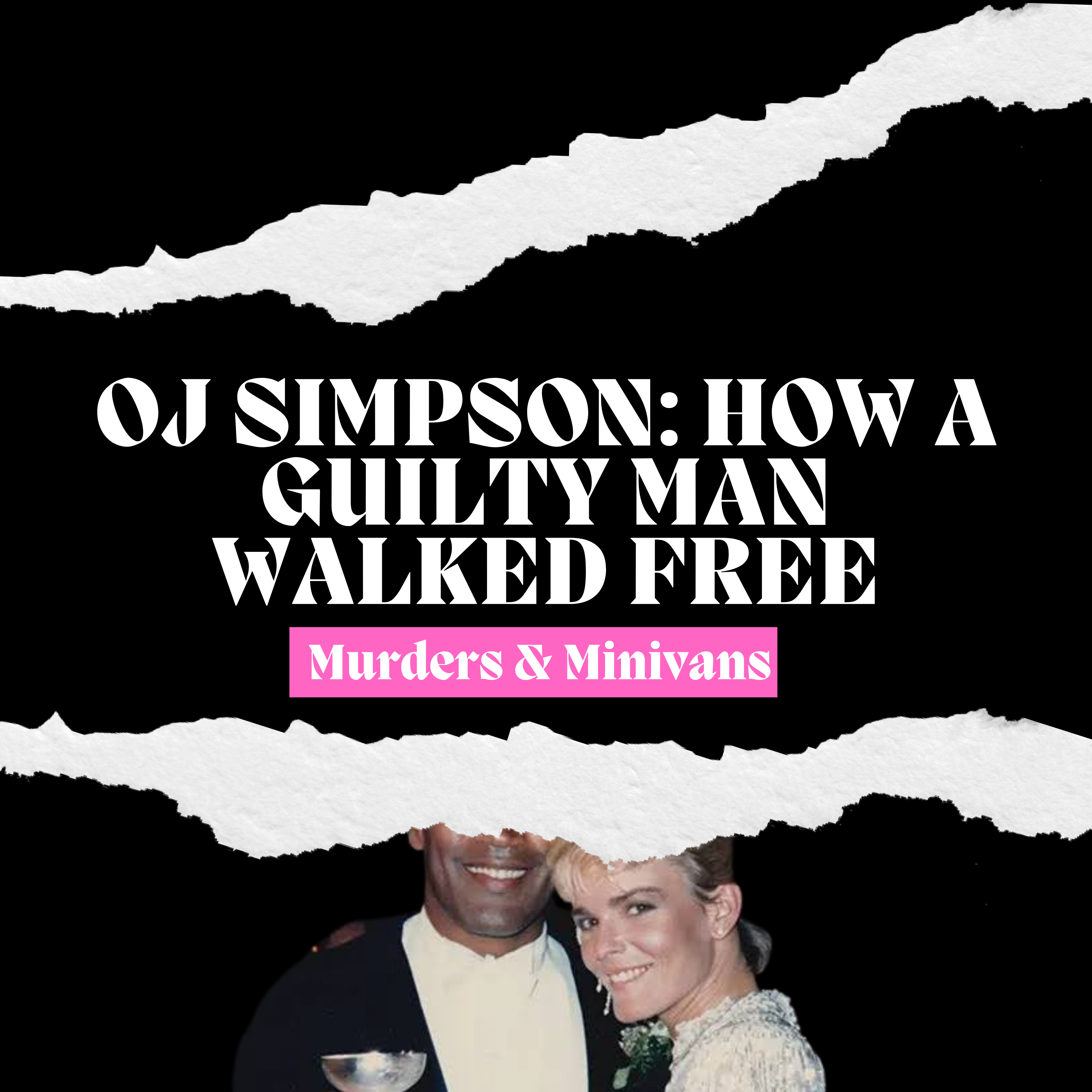
On June 12, 1994, Nicole Brown Simpson and Ron Goldman were stabbed to death outside her condo on Bundy Drive in Brentwood. Nicole was nearly decapitated. Ron had defensive wounds on his hands. He was 25 and had just stopped by to return a pair of glasses.
OJ Simpson was arrested five days later, but only after a slow-speed chase down the 405 in a white Ford Bronco that 95 million people watched live. He had a passport, a disguise, and $8,000 in cash in the car.
The trial lasted nearly nine months. The prosecution had blood, DNA, a history of domestic violence, and a 911 call where Nicole said he was going to kill her. The defense had a glove that didn't fit, a detective who'd used racial slurs, and a jury that deliberated for four hours.
Not guilty.
Two years later a civil jury disagreed. They found him liable for both deaths and ordered him to pay $33.5 million. He never paid most of it.
In 2008 he was convicted of armed robbery and kidnapping in Las Vegas and sentenced to up to 33 years. He served nine. He died of cancer in April 2024, still insisting he was innocent.
This is the case that taught America to watch a trial like a TV show. We get into all of it.
In This Episode:
- The timeline of June 12 and what the evidence actually showed
- Nicole's documented history with OJ and the calls that went unanswered
- The Bronco chase and why he didn't run
- The Dream Team, Mark Fuhrman, and how the defense flipped the script
- The glove, the DNA, and what the jury didn't buy
- The verdict, the reaction, and the racial divide it exposed
- The civil case and the $33.5 million he never paid
- Las Vegas, prison, parole, and how it ended
The Murder of Rachel Nickell
June 22, 2026 · 3316
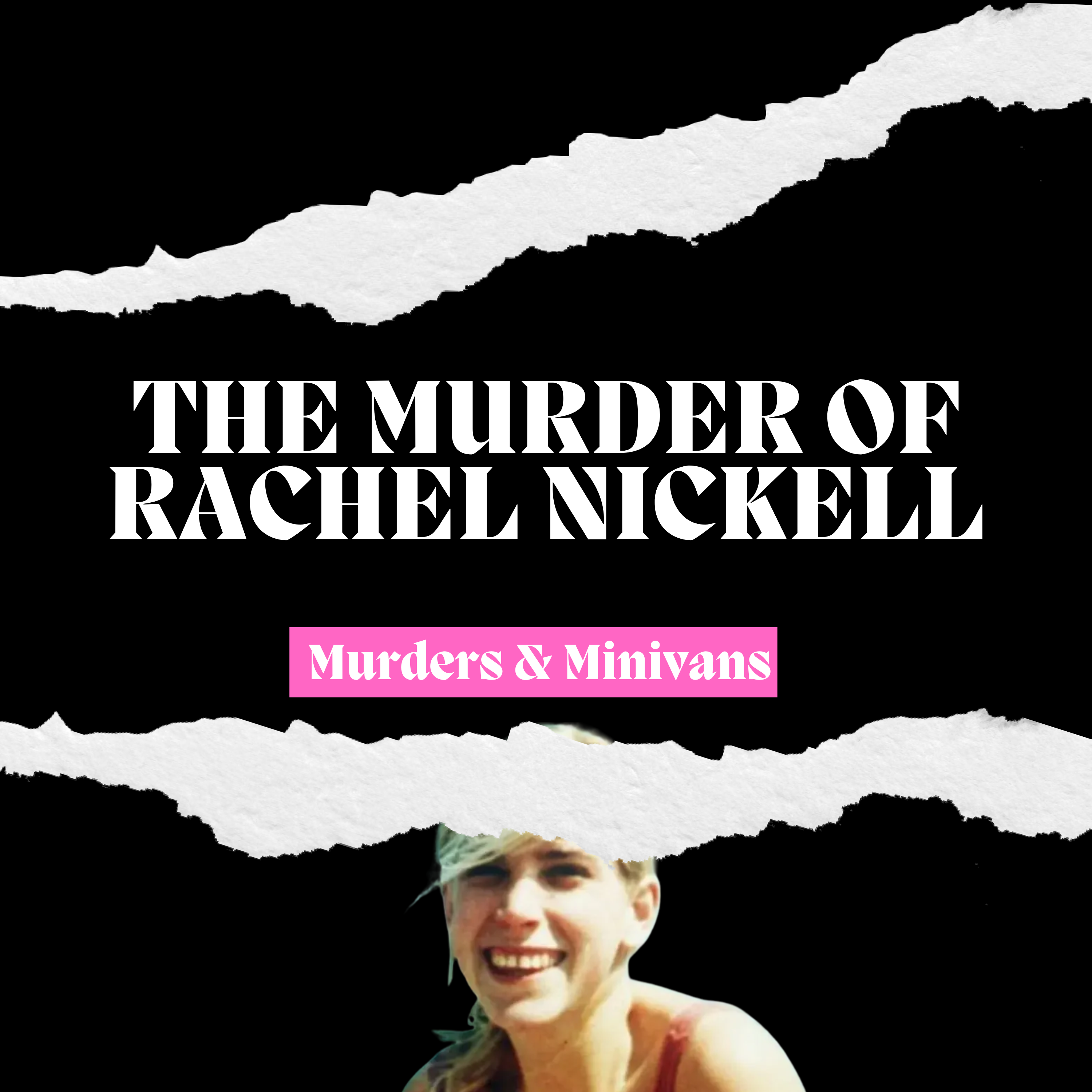
this week we're covering the 1992 murder of Rachel Nickell on Wimbledon Common, London.... one of the most mishandled cases in metropolitan police history.
Rachel was 23 years old when she was attacked and killed during a morning walk with her two-year-old son, Alex, and their dog molly. the case that followed lasted sixteen years and destroyed the life of an innocent man before dna evidence finally identified the real killer: Robert Napper, a serial rapist already detained at broadmoor hospital.
we cover:
- who Rachel was and the life she was building
- what Alex witnessed and what he told police
- the offender profile that derailed the entire investigation
- operation Edzell — the five-month undercover honeytrap targeting colin stagg
- the old bailey collapse and what acquittal actually looked like for colin
- Robert Napper's history and the multiple times police could have stopped him
- the Bisset murders
- the cold case DNA work that cracked it open
- the IPCC report and the catalogue of failures it confirmed
- where Colin, Alex, and Andre are now
if you want to go deeper: netflix's the murder of rachel nickell (documentary) and the witness (drama series) are both streaming now. alex and andré hanscombe consulted on both.
sources used in this episode: wikipedia, crime+investigation uk, the guardian, bbc, time magazine, the sun, ipcc 2010 commissioner's report, biography.com, thecinemaholic, people magazine, oxygen.com, primetimer, courtnewsuk, tvguide.co.uk
The Many Lives of Taylor Parker
June 15, 2026 · 4043
In October 2020, 21-year-old Reagan Simmons-Hancock was found murdered in her home in New Boston, Texas. She was 35 weeks pregnant. Her daughter Braxlynn Sage was removed from her body and died hours later. Reagan's three-year-old daughter Kynlee was found hiding in another room of the house, physically unharmed.
The person responsible was Taylor Parker — a woman Reagan knew well enough to let photograph her wedding.
This episode covers the full story of the Taylor Parker case: the ten-month fake pregnancy, the elaborate fraud schemes running parallel to it, the meticulous planning that went into October 9th, 2020, and the 49-day capital murder trial that followed. Taylor Parker was convicted of capital murder and sentenced to death in November 2022. In November 2025, the Texas Court of Criminal Appeals affirmed her conviction and death sentence in full, overruling all 25 points of error.
In this episode:
- Who Taylor Parker was before the murder — two marriages, two children she didn't have custody of, and a decade-long pattern of elaborate deception documented across employment records, medical files, and court testimony
- The 2015 hysterectomy that left her permanently infertile — and how she weaponized the grief of it rather than processing it
- The fake pregnant belly, recycled sonogram images, staged maternity photoshoot, and gender reveal party that formed the architecture of a ten-month lie
- The parallel schemes running alongside the fake pregnancy: a staged $20 million real estate fraud, a manufactured murder-for-hire plot, fake personas including a fictional father, a fictional police contact, and a fictional detective she invented from inside a jail cell
- What her former friends Kenzie Bright and Abby Bell testified to at trial — including Abby reaching out two days before the murder and never getting a response
- How Taylor got Wade Griffin 200 miles away on the morning of October 9th — and why she'd been planning that specific detail for weeks
- The events of October 9th, 2020, as established by the physical evidence and crime scene testimony
- What Taylor's own mother Shonna Prior knew, when she knew it, and what she testified to at the penalty phase — including the exchange on the stand that stopped the courtroom
- The 49-day trial, 142 witnesses, the verdict, and the sentencing
- Where things stand now: Reagan's family, Kynlee, Homer Hancock, and Taylor Parker on death row at the Patrick L. O'Daniel Unit in Gatesville, Texas
Reagan Michelle Simmons-Hancock was born November 14, 1998, in Hope, Arkansas. She was 21 years old when she died. She loved sunflowers. She let her three-year-old announce the pregnancy. She is buried alongside her daughter.
Braxlynn Sage Hancock was born and died on October 9, 2020. She had a heartbeat. She was a few hours old.
Kynlee Grace Hancock is approximately eight years old. She goes to the gravesite when she wants to see her mom.
Sources & further reading:
- KTAL/KMSS Texarkana trial coverage (day-by-day)
- Texarkana Gazette trial reporting
- Texas Court of Criminal Appeals opinion, November 6, 2025
- Bowie County District Court records
The House of Murdaugh | Part 2
June 8, 2026 · 4026
The Murdaugh Murders, Part 2: The Trial, the Verdict, and the Reversal
On June 7, 2021, Maggie and Paul Murdaugh were found shot to death at the family's Moselle property in Colleton County, South Carolina. Alex Murdaugh called 911 seventeen seconds after his GPS placed him at the scene. He had told investigators he was never there.
This is Part 2 of our Murdaugh family coverage. We walk through the investigation, the six-week trial, and the unanimous South Carolina Supreme Court ruling that overturned Alex's double murder convictions in May 2026.
The crime scene. Two victims. Two weapons. No sign of robbery. Paul was found in the feed room doorway, shot twice at close range with a shotgun. Maggie was found yards away in the open, shot four to five times with a rifle. A wound to her wrist was consistent with a defensive injury. Neither gun was ever recovered.
The kennel video. Paul's phone was locked for nine and a half weeks before SLED cracked it using his birthday as the passcode. At 8:44 p.m. on the night of the murders, a video recorded at the kennels captured three voices: Paul's, Maggie's, and a third voice saying "Come here, Bubba." Every person who heard it identified that third voice as Alex. He had told investigators repeatedly he was not at the kennels that night.
The motive. A civil lawsuit stemming from the 2019 boat crash that killed Mallory Beach had been pressing for full financial disclosure from Alex. That hearing was scheduled for June 10th. The murders happened June 7th. Alex had been stealing approximately $12 million from clients for at least 16 years.
The trial. Six weeks. 28 days of testimony. Alex took the stand and confirmed the voice in the video was his. He said he had lied to investigators because of paranoid thinking caused by his opioid addiction. On cross-examination, prosecutor Creighton Waters asked why an innocent man discovering his murdered family would establish in his very first statement that he had not been at the kennels. Alex did not have a satisfying answer.
The jury deliberated for less than three hours. Guilty on all four counts. Two consecutive life sentences without parole.
The reversal. Becky Hill was the Colleton County Clerk of Court. She had a book deal. Multiple jurors reported she told them not to be fooled or thrown off by the defense, and to watch Alex's body language closely when he testified. In May 2025 she was arrested. In December 2025 she pleaded guilty to lying about her conduct during post-trial proceedings.
On May 13, 2026, the South Carolina Supreme Court unanimously overturned Alex's murder convictions. The court called Hill's conduct "breathtaking," "disgraceful," and "unprecedented in South Carolina." A new trial was ordered.
Alex remains in prison on federal and state financial crimes charges. The attorney general has said he plans to retry the murder case before the end of 2026.
Maggie Murdaugh was 52. Paul Murdaugh was 22.
The House of Murdaugh | Part 1
June 1, 2026 · 3288
Before Alex Murdaugh shot his wife and son at the family's South Carolina hunting estate, he spent decades building a lie so elaborate that almost no one saw it coming. In Part 1 of this two-part series, we go back to the beginning — not just to June 7, 2021, but to 1920, when the Murdaugh family first seized control of the criminal justice system in the South Carolina Lowcountry and didn't let go for 86 years.
This episode covers the full family dynasty, the mechanics of Alex's $12 million fraud operation, his opioid addiction, the death of housekeeper Gloria Satterfield, Paul Murdaugh's abuse of his girlfriend Morgan Doughty, the 2019 boat crash that killed 19-year-old Mallory Beach, and the civil lawsuit that put a ticking clock on everything. We end on the night of June 7, 2021 — when Maggie texted a friend that Alex sounded "fishy," drove to meet him anyway, and never came home.
Part 2 drops next week and covers the investigation, the trial, the verdict, and the bombshell Supreme Court ruling from May 2026 that overturned everything.
IN THIS EPISODE
- The Murdaugh family's 86-year grip on the 14th Judicial Circuit of South Carolina — three generations of circuit solicitors, from 1920 to 2006
- The law firm PMPED and how it made its money ("the house that CSX built")
- Who Alex Murdaugh was — his background, his family, his charisma, and what was running underneath all of it
- Alex's opioid addiction: 30-60 pills a day, sourced from a drug-dealing distant cousin, costing an estimated $40,000-$60,000 per week at black market prices
- The fraud in detail: the fake "Forge" account, the Laffitte bank scheme, 16+ years of stolen client settlements totaling at least $12 million across an estimated 30-50 victims
- Gloria Satterfield — the Murdaugh family housekeeper who died after a fall at the Moselle estate in 2018, whose $4.3 million wrongful death settlement Alex stole entirely from her grieving sons
- Morgan Doughty's account of Paul's abuse — the hotel incident, the 2017 Christmas truck crash, and how the Murdaugh family cleaned up after their son every single time
- The February 2019 boat crash that killed Mallory Beach, 19 — the night Paul drove drunk with a BAC of 0.24, refused to let anyone else take the wheel, and walked away from the scene while Mallory's body was somewhere in the dark water
- The civil lawsuit, Mark Tinsley's push for full financial disclosure, and the hearing that was scheduled for June 10, 2021 — three days after the murders
- June 7, 2021: what Maggie's last text said, what Paul was doing at the kennels at 8:44 p.m., and what the phone data shows about the last minutes of their lives

The Last Shot | Lyle and Erik Menendez
May 25, 2026 · 3927
Beverly Hills. August 20, 1989. José and Kitty Menendez are watching a James Bond movie in the den of their $13.5 million mansion. By the end of the night, they'll be shot a combined sixteen times by their own sons.
This week on Murders & Minivans, we're going deep on one of the most complicated — and most misunderstood — cases in American true crime history. Lyle and Erik Menendez. The killings. The spending. The trial. The abuse claims. And the letter that sat undiscovered for over thirty years.
We talk about who José and Kitty Menendez actually were — not the shorthand versions, but the full picture. A Cuban immigrant who built a genuine American success story and ran his household like a company. A woman who gave up her ambitions, survived her husband's affairs, and may have known something terrible was happening under her own roof.
We walk through the night of the murders, the six months of spending that followed, the therapy session confession that unraveled everything, and two trials that reached completely different conclusions about the same set of facts.
We get into the abuse claims — what exists, what doesn't, and why a letter written by a teenager to his cousin in 1988 changes the conversation. We talk about Roy Rossello, the Netflix series, and what thirty-five years in prison actually looks like.
And we sit with the question this case has always demanded: can both things be true at the same time?
Follow us on Instagram: @murdersandminivans

Thallium is element 81. A heavy metal banned in the United States since 1972. Colorless, odorless, and tasteless in its soluble form. It mimics potassium so convincingly that your cells invite it in. It starts with nausea, fatigue, stomach pain — things that look like a hundred other conditions. Weeks later, the hair falls out in fistfuls. By then, the nervous system has already taken serious damage.
The antidote is called Prussian blue. Doctors almost never think to use it, because they almost never think to test for thallium. That gap between exposure and diagnosis is exactly what makes it a weapon.
In the fall of 2017, a woman named Brigida started feeling sick in her home in Dulzura, California. She went to doctor after doctor. She was told it was fibroids. Cancer. Lupus. An autoimmune disorder. One doctor told her she probably just had bad menstrual cramps and needed to relax.
Her husband made her food. He went to appointments with her. He watched her lose her hair and told her she just didn't know how to cook.
He had purchased thallium online, from an overseas supplier. Three times.
This episode covers the full story of what thallium is and what it does to a human body, Brigida's case and the one doctor whose specific expertise saved her life, the 1994 poisoning of Chinese student Zhu Ling and the Usenet SOS that reached 1,500 researchers worldwide, and what happened when a state used the same logic as a kitchen.
In this episode:
- What thallium actually is, how it works inside a human body, and why it is almost never caught in time
- Prussian blue: the antidote that sounds like a paint color, because it is one
- Brigida's story: months of wrong diagnoses, progressive nerve damage, and the moment her mother drove her to the hospital because she couldn't breathe
- Dr. Jeff Lapoint: the one ER physician in the right place with the right board certification
- The search history that ended Race Uto's marriage and his freedom
- Three separate poisonings. Three consecutive life sentences.
- The detail about the breakfast that Brigida remembered at sentencing
- Zhu Ling: the 1994 Beijing case, the Usenet SOS, the 1,500 responses, and the hospital that didn't act
- The suspect with political connections whose case was closed in 1998
- Zhu Ling's death in December 2023, at age 50, with no one ever charged
- Alexander Litvinenko and what it looks like when a state does this with polonium instead
People mentioned:
Brigida — survivor, special education teacher, Dulzura, California
Race Uto — convicted of three counts of premeditated attempted murder, sentenced to three consecutive life terms
Dr. Jeff Lapoint — board-certified toxicologist, emergency physician, Kaiser Permanente San Diego
Zhu Ling — thallium poisoning victim, Tsinghua University, Beijing, 1994. Died December 22, 2023
Sun Wei — identified as the only person with documented access to thallium in Zhu Ling's case. Never charged
Alexander Litvinenko — former FSB officer, poisoned with polonium-210 in London, November 2006
Marina Litvinenko — Alexander's wife, still seeking justice
Sources:
- Dateline NBC, "The Prussian Blue Mystery" (July 2019)
- NavyTimes, Times of San Diego, East County Californian, San Diego ABC 10News
- National Center for Biotechnology Information
- American Chemical Society
- Wikipedia: thallium poisoning, Zhu Ling poisoning case, poisoning of Alexander Litvinenko
- European Court of Human Rights ruling on Litvinenko, 2021
Follow Murders & Minivans:
Instagram: @murdersandminivans
Leave a rating wherever you listen.

One-Way Ticket to Vietnam
May 11, 2026 · 3416
This is the first episode in our new pod studio! Tali's mic was not co-operating until about 8:20 which is right about when the case starts ◡̈
A Harvard law professor. A bitter divorce. A dentist with a Ferrari and a god complex. Two Miami gang members. And a mother-in-law who, the day after her son was convicted of murder, booked a one-way flight to a country with no extradition treaty.
This is the murder of Daniel Markel.
Dan Markel was 41 years old, a tenured law professor at Florida State, a devoted father to two little boys, and one of the most respected criminal law scholars in the country. He spent his career writing about punishment, retribution, and what justice actually looks like.
On July 18, 2014, he was shot twice in the head in his own garage by two Miami gang members who had driven up in a rented Toyota Prius and followed him home from the gym.
It took eleven years, five convictions, and four separate trials to get there. His boys were toddlers when he died. They're teenagers now. Their mother changed their last names.
This episode covers the full story: the Adelson family, the custody war, the chain of connections that linked a periodontist with a Ferrari to a Latin Kings hitman, and the woman in the middle who held it all together. It also covers what happened to the boys, what Ruth and Phil Markel have been fighting for ever since, and why the prosecutor told reporters to "stay tuned."
In this episode:
- Who Dan Markel was and why his career in criminal law philosophy makes this story hit differently
- The Adelson family: Donna, Harvey, Charlie, and what "enmeshed" actually looks like in practice
- The divorce, the custody battle, and the relocation request a judge denied
- The motion Dan filed in 2014 to restrict Donna's unsupervised access to his sons
- July 18, 2014: what happened, and the 911 dispatch error that has stuck with everyone who covered this case
- How investigators built the chain: SunPass records, cell data, a phone call made immediately after the shooting
- Katherine Magbanua: the woman who connected the Adelsons to the trigger man
- Luis Rivera's confession and the words he remembered: "the lady wants her two kids back"
- Four trials, two mistrials, one plea deal, five convictions
- Charlie Adelson on the stand in his own defense and why the jury didn't buy it
- Donna at Miami International Airport with one-way tickets to Hanoi
- Wendi: what we know, what she's said under immunity, and why she hasn't been charged
- The Markel Act: Florida legislation passed because of this case
- Ruth and Phil Markel, eleven years of trials, and two grandsons who are only now starting to ask about their father
People mentioned:
Dan Markel — victim, law professor, FSU College of Law
Wendi Adelson — Dan's ex-wife, named unindicted co-conspirator, not charged
Charlie Adelson — Wendi's brother, convicted of first-degree murder, conspiracy, and solicitation, sentenced to life plus 30 years
Donna Adelson — Wendi's mother, convicted of first-degree murder, conspiracy, and solicitation, sentenced to life in prison
Harvey Adelson — Wendi's father, named unindicted co-conspirator, not charged
Katherine Magbanua — convicted of first-degree murder, conspiracy, and solicitation, sentenced to life plus two consecutive 30-year terms
Sigfredo Garcia — convicted of first-degree murder, sentenced to life without parole Luis Rivera — pled guilty to second-degree murder, sentenced to 19 years
Ruth and Phil Markel — Dan's parents, advocates for grandparent visitation rights
Georgia Cappleman — lead prosecutor

The Fundamentalist Church of Jesus Christ of Latter-Day Saints operated in plain sight for decades — a polygamist cult running across the American Southwest, into rural Texas, and up into the mountains of southeastern British Columbia. What they built wasn't a church. It was a supply chain for the sexual exploitation of children, protected by theology, enforced by economics, and ignored by governments for half a century.
This episode covers the full history: the 1953 Short Creek raid that backfired and gave the FLDS fifty years of immunity, Rulon Jeffs and the doctrine of absolute obedience, Warren Jeffs' rise to power and the marriages he arranged for girls as young as twelve and thirteen, the 2008 Texas raid on the Yearning for Zion Ranch, and the Canadian arm of the operation in Bountiful, B.C. — where girls were driven across the US border and handed to Warren Jeffs while investigators spent twenty years trying to figure out if they were even allowed to charge anyone.
It also covers the people who got out. And what they did after.
In this episode:
- What the FLDS actually is and why it has nothing to do with modern Mormonism
- The 1953 Short Creek raid and why it gave the FLDS fifty years of political cover
- Rulon Jeffs, the "One Man" doctrine, and how the UEP trust trapped members financially
- Warren Jeffs: how he consolidated power, performed marriages from a fugitive SUV, and ran his church from a Texas prison cell
- The "Lost Boys," the "seed bearer" doctrine, and the Law of Placing
- Elissa Wall's testimony and why she chose to be named
- The 2008 YFZ Ranch raid... 439 children removed, triggered by a fake call
- Bountiful, B.C.: Winston Blackmore, James Oler, and the human trafficking operation four hours south of Calgary
- The constitutional fight over Canada's anti-polygamy law — and what happened when it finally moved to trial
- Samuel Bateman: a ten-year-old bride and three children found locked in a trailer
- The women who got out — and what they built after
Sources & further reading:
- Stolen Innocence by Elissa Wall
- Escape by Carolyn Jessop
- The Witness Wore Red by Rebecca Musser
- Breaking Free by Rachel Jeffs
- Lost Boy by Brent Jeffs
- Under the Banner of Heaven by Jon Krakauer
- FBI affidavits re: Samuel Bateman (filed December 2022)
- BC Supreme Court Reference re: Section 293, Criminal Code (2011)
- Southern Poverty Law Center: FLDS designation
Follow Murders & Minivans:
Instagram: @murdersandminivans
Wherever you listen, leave a rating please! it genuinely helps more than you know

She Was Just Trying to Race: The Murder of Moriah Wilson
April 27, 2026 · 4508
kaitlin armstrong googled "can pineapples burn your fingerprints" after killing someone. she sold her jeep for cash two days later. flew to new york. used her sister's passport to get to costa rica. got a nose job, changed her name, dyed her hair, and started teaching yoga on the beach. she responded to a fake job listing posted by u.s. marshals and got arrested in a hostel lobby 43 days after the murder.
the jury took two hours.
but before any of that, there was Mo. Anna Moriah Wilson. 25 years old, dartmouth engineering grad, professional gravel cyclist, one of the most exciting names coming up in the sport. she was in austin for a race she was favored to win. she was staying at a friend's apartment. she was alone when armstrong showed up.
this episode covers the full case. the relationship web, the night of may 11th, the investigation, the fugitive chase, the trial, the sentencing, the civil lawsuit, and the fraudulent asset transfer that brought colin strickland back into the story in the worst possible way. we also get into the moriah wilson foundation and what the wilson family has built in her name since her death.

Waco: The Prophet and the Fire
April 20, 2026 · 4786
On February 28, 1993, seventy-six ATF agents pulled up to a property outside Waco, Texas, in cattle trailers. Fifty-one days later, the building was gone and seventy-six people were dead inside it. Twenty of them were children.
This is the story of Vernon Wayne Howell, the ninth-grade dropout from Houston who memorized the Bible, renamed himself David Koresh, and convinced over a hundred people to follow him into an armed standoff with the federal government. It's also the story of what the ATF and FBI did, what they chose not to do, and why the question of who actually lit that fire has never fully been answered.
We're covering all of it: the abuse, the arsenal, the fifty-one days of negotiations that might have worked, the decisions that guaranteed they didn't, and the ripple effect that reached Oklahoma City exactly two years later.
This one doesn't have a clean villain. It has a lot of people making catastrophic choices and a lot of people, most of them kids, who never got a say in any of it.

25 Minutes on King Road
April 13, 2026 · 3140
Moscow, Idaho hadn't seen a murder in seven years. It was the kind of town where parents felt okay dropping their kid off at college and driving away. Small. Quiet. Safe.
Then, sometime between 4:00 and 4:25 in the morning on November 13th, 2022, someone entered a house on King Road and stabbed four people to death in 25 minutes. Kaylee Goncalves. Madison Mogen. Xana Kernodle. Ethan Chapin. Two of them were weeks away from graduating. One of them was only there because it was the weekend and he was staying with his girlfriend.
The internet caught fire. Tips flooded in. Innocent people were accused. The town was terrified. And the Moscow Police Department — a small agency that hadn't worked a homicide in years — was staring at a crime scene with almost nothing to go on.
Almost.
A knife sheath on a dead girl's bed. A white Hyundai Elantra on surveillance footage. A phone that went dark at 2:47 AM and came back online forty miles away two hours later. And a DNA profile that didn't match anyone in the national database — until it did.
Bryan Kohberger was a 28-year-old PhD criminology student at Washington State University, eight miles from that house. He had studied how killers choose their targets. He had asked convicted criminals, in a formal research survey, why they picked one victim over another. He had driven past 1122 King Road more than a dozen times in the months before the murders.
He applied for a police internship with the same department that would spend six weeks hunting him.
This episode covers everything: the victims, the night, the investigation, the evidence trail, the arrest, and the legal saga that ended on July 23rd, 2025 with four consecutive life sentences and two words from Kohberger himself.
Two words in nearly three years.
"I respectfully decline."

The Most Gucci of Them All
April 6, 2026 · 4030
In March 1995, Maurizio Gucci was shot four times outside his Milan office. He had the money, the girlfriend, the peace. What he didn't have was any idea that a chain of people — a socialite, a psychic, a hotel porter, and a broke pizzeria owner — had been quietly building toward that morning. This is the story of a dynasty that ate itself alive, a woman who described $860,000 a year as a bowl of lentils, and a brand that only got good once the family was gone.
For source info, comments questions: murdersminivans@gmail.com
FOLLOW US! @murdersandminivans on IG

Big Daddy: The Murder of Fabio Sementilli
March 30, 2026 · 3013
Fabio Sementilli spent thirty years building something remarkable. An Italian-Canadian kid who left school early to follow his sister into hairstyling, he climbed all the way to VP of Education at Wella Professionals, managing 500 employees, running studios across North America, mentoring thousands of stylists who called him Big Daddy. The day before he died, he posted about how blessed he felt. The next afternoon, his sixteen-year-old daughter came home from school and found him stabbed to death on his own patio. This week we're covering the full story: who Fabio actually was, the affair his wife had been hiding, the staged burglary, the DNA in the stolen Porsche, and the eight-year road to a conviction that ended with Monica Sementilli sentenced to life without parole in June 2025. This one's less about the crime and more about the man it was committed against, because Fabio Sementilli deserves to be remembered for more than how he died.

Worth More Dead Than Alive: The Murder of Lisa Knoefel
March 23, 2026 · 2465
On the night of November 16th, 2012, a thirteen-year-old girl in a quiet Ohio suburb called 911 while her mother was being stabbed to death. The person holding the knife was an eighteen-year-old foster daughter named Sabrina Zunich. And for ten months, that's where the story seemed to end; a troubled teenager, a horrific act, a grieving family.
Then Sabrina started talking.
What came out was a case that gets darker the deeper you go: a 41-year-old man who spent months grooming a vulnerable foster child in his own home, coaching her on which knife to use, and then went to work while she carried out what he'd spent months preparing her to do...before collecting $785,000 in life insurance and buying a boat.
This week on Murders & Minivans, we're covering the murder of Lisa Knoefel — a child sex crimes social worker who spent her career identifying exactly this kind of predator, and never saw him coming because he was sleeping in her bed.

Locked From the Inside: The Suspicious Death of Ellen Greenberg
March 16, 2026 · 2938
In January 2011, 27-year-old first-grade teacher Ellen Greenberg was found dead in her Philadelphia apartment during a blizzard. She had 23 stab wounds, including ten to the back of her own neck, 31 bruises in varying stages of healing, and a serrated kitchen knife buried four inches into her chest. The city of Philadelphia ruled it a suicide, and they have spent the last fourteen years defending that conclusion against independent forensic experts, two civil lawsuits, a Pennsylvania Supreme Court petition, and a court-mandated reinvestigation in which five out of seven outside consultants disagreed with them. The original pathologist who changed the ruling to suicide later signed a sworn statement saying it should be classified as something other than suicide. The city's own neuropathologist testified that Ellen may have already been dead when at least one of those wounds was inflicted. The crime scene was cleaned the day after her body was found. Evidence was removed from the apartment by her fiancé's uncle (the Chairman of the Pennsylvania Judicial Conduct Board) before police had a search warrant. The security guard that the medical examiner cited as a key reason for changing the ruling was never actually there. In February 2025, the city settled with Ellen's family for $650,000, made them promise to never sue again, conducted their reinvestigation, found 23 more injuries they somehow missed the first time, and still said suicide. Today we're going through the whole thing, because Ellen Greenberg deserves a lot better than what Philadelphia gave her.

Just a Nobody from Brooklyn: How the Powerful Protect Their Own (Part 3/3)
March 9, 2026 · 2918
Jeffrey Epstein didn't just know powerful people. He built a machine designed to make himself untouchable — one donation, one dinner, one named research program at a time. In this episode, we break down how that machine worked: the political donations, the Harvard money, the eugenics project he talked about openly while hiding everything else, and the 38,000+ mentions of the sitting president buried in files that took over a month past the legal deadline to release. We're not doing the hand-wavy coverage. We're going through it.

Just a Nobody From Brooklyn: The Girls Nobody Listened To (Part 2/3)
March 2, 2026 · 3171
They were 12, 13, 14 years old. They told their stories to the FBI, to police, to prosecutors. And for years, nobody did anything. In Part 2, we go deep into the lives of the victims — Virginia Giuffre, Maria Farmer, Annie Farmer, Courtney Wild, and dozens of Jane Does — and trace exactly how the system failed them at every turn. We break down the grooming process, the weaponization of poverty, and the secret 2008 plea deal that let a serial predator walk free. This is the episode that needs to be heard.

Just a Nobody From Brooklyn: The Making of a Monster (Part 1 of 3)
February 23, 2026 · 3825
He was born to a groundskeeper and a school aide in a middle-class neighborhood in Coney Island. He never finished college. He had no credentials, no pedigree, no obvious path to power. So how did Jeffrey Epstein end up with a Manhattan mansion, a private island, a Boeing 727, and the phone numbers of presidents and princes? In part one of this three-part series, we trace the early life of one of the most prolific predators in modern history, from his surprisingly ordinary Brooklyn upbringing to the elite Manhattan school where the behavior started, through the Wall Street firm that handed him the keys to the ultra-wealthy, all the way to the private island locals had already nicknamed "Pedophile Island." This isn't just a story about a monster. It's a story about a system. The networks that protected him, the institutions that looked the other way, and the woman who walked into the FBI in 1996, gave them everything, and was told to go home. By the time police in Palm Beach had enough evidence to put him away for life, Epstein had already made his most important investment. Not in stocks. Not in real estate. In powerful men. And that investment was about to pay off.
For Show Notes, Questions/Comments: murdersandminivans@gmail.com

The Canton Cover-Up: What Really Happened to John O'Keefe?
February 16, 2026 · 2871
On a snowy January morning in 2022, Boston police officer John O'Keefe was found dying in the front yard of a fellow officer's home in Canton, Massachusetts. His girlfriend, Karen Read, was quickly arrested and charged with murder. But what seemed like a straightforward case spiraled into one of the most controversial and divisive criminal trials in recent Massachusetts history.
Was Karen Read a drunk, jealous girlfriend who ran down her boyfriend and left him to die? Or was she the victim of a massive law enforcement cover-up, framed for a murder committed by others inside the house?
This deep-dive episode explores every twist in this extraordinary case: the botched investigation led by a disgraced state trooper, the mysterious Google search for "how long to die in cold" made hours before the body was discovered, allegations of planted evidence and dog attacks, two dramatic trials, and a community torn apart by competing narratives of truth and justice.
With angry voicemails, missing evidence, fired investigators, and thousands of protesters demanding answers, the Karen Read case became a cultural phenomenon that exposed serious cracks in the criminal justice system. But after all the testimony, all the theories, and all the outrage, one question remains: what really happened to John O'Keefe?r
The Ken and Barbie Killers: Paul Bernardo and Karla Homolka
February 9, 2026 · 4010
This comprehensive true crime deep-dive examines one of Canada's most disturbing criminal cases; the story of Paul Bernardo and Karla Homolka, dubbed "The Ken and Barbie Killers."
In this episode, we explore the horrifying crimes committed by this seemingly perfect couple in Southern Ontario during the late 1980s and early 1990s. From Paul's reign of terror as the Scarborough Rapist to the murders of three teenage girls; including Karla's own sister - this case shocked the nation and exposed catastrophic failures in the justice system.
We examine Paul Bernardo's transformation from a charming university student into a serial rapist and killer, Karla Homolka's controversial role as victim versus willing accomplice, and the infamous plea deal that became known as "The Deal with the Devil." The episode details the systemic failures that allowed these crimes to continue, including a two-year delay in DNA testing that could have prevented multiple murders.
Through careful analysis of the investigation, trials, and aftermath, we confront difficult questions about evil hiding behind attractive facades, gender bias in criminal justice, and whether true accountability was ever achieved. We also honor the memories of Tammy Homolka, Leslie Mahaffy, and Kristen French and the young victims whose lives were stolen.

The Double Life of Colonel Russell Williams: From Elite Pilot to Serial Killer
February 2, 2026 · 3319
Colonel Russell Williams seemed to embody military excellence; a decorated commander of Canada's largest air force base, trusted to fly prime ministers and royalty, with an impeccable service record spanning decades. But behind the uniform and accolades lurked a predator whose crimes would shock a nation.
Between 2007 and 2010, Williams led a sinister double life. While commanding Canadian Forces Base Trenton by day, he spent his nights breaking into homes in the communities he was sworn to protect. What began as fetish burglaries—stealing lingerie from women and girl; escalated into sexual assault and eventually murder. His victims included Marie-France Comeau and Jessica Lloyd, whose deaths would finally expose his dark secrets.
Williams' case is particularly chilling for its contradictions: a man of discipline and achievement who meticulously documented his own crimes through thousands of photographs. His methodical nature, which served him well in the military, became the very evidence that would convict him. The investigation culminated in one of the most famous police interrogations ever recorded, where detective Jim Smyth systematically dismantled Williams' carefully constructed facade over the course of ten hours.
This case raises profound questions about the nature of evil, the masks people wear, and how someone entrusted with immense responsibility could harbor such darkness. It remains one of Canada's most disturbing criminal cases, a stark reminder that monsters can hide in the most unexpected places.

The Coronado Mansion Death: Suicide or Murder at the Spreckels Estate?
January 26, 2026 · 2346
A wealthy pharmaceutical CEO's girlfriend is found dead: naked, bound hand and foot, hanging from a balcony. Days earlier, his six-year-old son suffered a mysterious fall in the same mansion. The sheriff says suicide. Her family says murder. A jury awarded them $5.2 million. Then everything changed.
This is the Rebecca Zahau case, and it's one of the strangest death investigations you'll ever hear. We've got deleted voicemails, four separate head injuries that may or may not make sense, a cryptic message painted on a door, and medical examiners who can't agree on what killed her. Police demonstrated that yes, technically, she could have tied her own hands behind her back before hanging herself. But should we believe she actually did?
Fifteen years later, the questions remain: What happened to six-year-old Max Shacknai? What was in that deleted voicemail? Why would a deeply religious woman who everyone described as perpetually happy choose such a bizarre method to end her life? And how do you explain away a jury verdict that found someone else responsible?
The official answer is suicide. But once you hear the details, you might not be so sure

When Trust Becomes Betrayal: Teacher Abuse Cases and the Language We Use
January 19, 2026 · 3096
This episode examines two cases separated by decades but connected by a troubling pattern: teachers who exploited their positions of authority to abuse students in their care.
We begin with the 1996 case of Mary Kay Letourneau, a sixth-grade teacher arrested while pregnant with her twelve-year-old student's child. What followed was years of media spectacle, debates about "forbidden love," and language that consistently softened what had actually happened...the systematic grooming and abuse of a child by a trusted adult.
Then we turn to a more recent case from 2025, when special education teacher Christina Formella was charged with over 50 felony counts related to the alleged sexual abuse of a 15-year-old student she taught, tutored, and coached.
This episode isn't about comparing individual cases. It's about asking harder questions: Why do we still struggle to call abuse what it is when the perpetrator doesn't match our expectations? How many adults watched, suspected, or knew—and did nothing? And what happens to the children at the center of these cases long after the headlines fade?
We explore the institutional failures, the families left navigating impossible situations, and the survivors forced to spend years untangling what happened to them. Because these cases don't end when the courtroom doors close. The damage ripples outward—into mental health struggles, fractured relationships, and lost childhoods that can never be reclaimed.
If you've ever wondered why these cases keep happening, or why the language around them matters so much, this episode breaks it down with clarity, empathy, and unflinching honesty.
Content warning: This episode discusses child sexual abuse, grooming, and includes references to suicide attempts and mental health struggles.
For source information, questions or concerns: murdersminivans@gmail,com

JonBenét Ramsey: Evidence, Errors, and an Unsolved Crime
January 12, 2026 · 3929
Some cases go cold because evidence disappears. Others because the truth is buried beneath mistakes, assumptions, and public pressure. The murder of JonBenét Ramsey may be both.
In this episode, we revisit the facts of the case, the forensic evidence that still sparks debate, and the investigative errors that changed everything. We also explore why this case continues to captivate the public and why it may never be fully resolved
For comments, questions or source information: murdersminivans@gmail,com.

Susan Powell: Missing in Plain Sight
January 5, 2026 · 3804
Susan Powell went missing in December 2009. Her husband claimed he took their children camping in a snowstorm but investigators suspected something far more sinister. This episode explores the evidence, the investigation, and the heartbreaking failures that allowed this case to end the way it did.
For source information, and any other comments/inquiries: murdersminivans@gmail,com

Solicitation Nation: Real Crimes Behind Fake Hitmen
December 29, 2025 · 1923
RentAHitman dot com is not a hitman service. It never was.
And yet, it has helped put multiple people in prison for trying to have someone murdered.
This episode breaks down how a fake website became one of the most effective accidental crime traps on the internet.
It starts in 2005 with Bob Innes, a former police academy graduate working in IT. He buys a domain name for a potential tech business. The word “hit” refers to web traffic and security testing. The business never launches. The inbox does.
For years, messages come in. Most are nonsense. Some are disturbing. He ignores them.
Then in 2010, one email is different. A woman in Canada sends full names and addresses of family members in the UK and asks for them to be killed over an inheritance dispute. It is specific. It is credible. Police are called. She is arrested, convicted, and sent to prison.
After that, Innes redesigns the site as an obvious parody. Fake testimonials. Ridiculous claims. Made-up regulatory language. Everything about it screams not real.
People still submit requests.
We explain how the site works today. The screening process. The cooling-off period. The moment where law enforcement gets looped in. By 2021, around 700 serious inquiries had come through. Many led to investigations. Multiple ended in convictions.
Then we talk about what this looks like in real life.
We break down the undercover recording of Dalia Dippolito calmly confirming she wants her husband killed, on tape, to a man she believes is a hitman. That video becomes the backbone of one of the most infamous murder-for-hire cases in the US.
And finally, we walk through the case of Valerie McDaniel and Leon Jacob. A story involving obsession, escalation, undercover officers, staged murder photos, a suicide, and a life sentence. No hypotheticals. No internet jokes. Real people. Real consequences.
This episode is about intent. About how often people cross that line. And how sometimes, shockingly, the internet catches them first.

Gypsy Rose Blanchard and the Reality of Freedom
December 22, 2025 · 2247
or years, the Gypsy Rose Blanchard case has been reduced to headlines. A sick child. An abusive mother. A shocking murder.
But that version skips over the part that matters most.
In this episode, we walk through Gypsy’s life in full context what her childhood actually looked like behind closed doors, how control and isolation shaped her understanding of the world, how the murder unfolded step by step, and why she ultimately went to prison even though she didn’t wield the knife.
Then we focus on the chapter most people ignore entirely: what happened after prison.
Gypsy was released into instant fame, internet obsession, and intense public scrutiny — all while trying to learn basic adult life skills for the first time in her 30s. We talk about the unstable patterns that emerged, the relationships, the oversharing, the pressure of TikTok celebrity, and why freedom hasn’t looked as simple as people expected.

Inside the Watts Family Tragedy
December 15, 2025 · 3508
When news broke in 2018 that a seemingly normal Colorado dad had reported his pregnant wife and two little girls missing, the world braced for another tragic family disappearance. What unfolded over the next 72 hours was darker and more calculated than anyone expected.
In this episode, we go deeper than the headlines and look at the parts of the case people rarely talk about. The manipulation. The double life. The financial pressure that had been building for years. The quiet behavioral shifts that friends and family later realized were red flags. We focus on the full picture instead of the simplified version that swept through social media.
We also take time to bring Shanann, Bella, Celeste, and baby Nico back into the center of the story. This case is often framed around one man, but it is really about a woman trying to hold her family together, two little girls full of personality and love, and a baby who never got a chance at life. Their lives deserve more space than the crime itself.
Expect a detailed and factual breakdown of the investigation, the key moments in the interrogation, the inconsistencies that exposed the truth, and the forensic evidence that sealed the case. We also touch on the lingering questions that still spark debate within the true crime community.
This is the case that made people ask a difficult question: How well do we truly know someone, and how far can a mask of normalcy stretch before it breaks?
Sources:
Official Records
Colorado Bureau of Investigation (CBI) Discovery Files
CBI/FBI/Dodge Correctional 2019 Prison Interview
Weld County Court Records & Sentencing Documents
Law Enforcement & Court Reporting
The Denver Post
ABC News / 20/20
HLN / CNN
NBC News
Media Summaries Based on Discovery
People
Business Insider
A&E True Crime
CBS News
TODAY / NBC
Documentaries & Public Footage
Netflix: American Murder – The Family Next Door
Frederick Police Bodycam Footage
Neighbor Surveillance Video
Forensics
Weld County Coroner Summaries
Prosecutor’s Sentencing Memorandum

Lori Vallow and the Lies of Light and Darkness
December 8, 2025 · 3333
When two children vanish, their mother insists they’re safe; but months later, they’re found buried in the backyard of her new husband, a man who writes doomsday prophecies.
In this episode, we unpack the chilling story of Lori Vallow Daybell the so-called “Cult Mom” who believed she was chosen by God to lead 144,000 survivors into the end times.
From a picture-perfect suburban life to murder charges, secret beliefs, and a trail of suspicious deaths, this case isn’t just about faith gone wrong; it’s about control, delusion, and the cost of blind devotion.
Join Tali and Stephanie as we break down the timeline, the twisted ideology, and the haunting final moments of JJ, Tylee & Charles
Dateline NBC — “The Doomsday Files: The Lori Vallow Story” (NBC News, 2020–2023)
East Idaho News coverage archives (Nate Eaton reporting, 2019–2024)
CourtTV Trial Archives – State of Idaho v. Lori Vallow Daybell, 2023
Netflix — Sins of Our Mother (2022)
The Idaho Statesman — timeline of Lori Vallow Daybell case
ABC News / 20/20 — “The Followers: Madness of Two”
Fox10 Phoenix local coverage – Justin Lum reporting
Arizona Republic archives on the deaths of Charles Vallow & Joseph Ryan
Law & Crime Network — trial testimony summaries and sentencing coverage
People Magazine — “Inside Lori Vallow’s Doomsday Cult Beliefs” (2021)
Kauai Police Department press releases, February 2020
Maricopa County Court Records — Vallow divorce and custody filings (public access)

Stephanie Talks Safety & Injustice / Tali Discusses the Disappearance of Phoenix Coldon
December 1, 2025 · 3487
Crime starts at 33:02.
In this episode, Stephanie opens the conversation with a thoughtful look at how we can give our kids small freedoms while still creating a reliable safety net around them. She talks about that delicate balance between trust and protection: how to let young people explore, make decisions, and grow, while still doing everything we can to keep them safe.
She also digs into the injustices that surround so many missing-person cases: who gets attention, who gets overlooked, and the shocking statistics behind it. Stephanie shares ways we can teach our children to recognize unfairness, speak up when they see inequality, and understand how systemic bias affects real families.
Then Tali takes us into the case of Phoenix Coldon, a bright and talented young woman who vanished from her family’s driveway in 2011. Tali walks through Phoenix’s life, the complicated dynamics surrounding her disappearance, the conflicting reports, and the haunting theories that still linger more than a decade later.
This episode blends social insight, emotional depth, and true crime storytelling: offering both a broader lens on injustice and a closer look at one family’s heartbreaking search for answers.

Stephanie Talks Trauma / Tali Covers the horrific crimes of Douglas Garland
November 24, 2025 · 3141
Crime Discussion begins at 24:30
We talk about how trauma shows up, how it shapes us, and how people turn pain into purpose; before moving into the story of Douglas Garland and the murders of Alvin and Kathy Liknes and 5-year-old Nathan O’Brien.
This episode covers: ✨ Why trauma is subjective and not a competition ✨ The tools that actually help (therapy, journaling, community, creativity) ✨ Two incredible women who turned their trauma into change ✨ A factual, victim-centered breakdown of the Liknes–O’Brien case ✨ How Jennifer O’Brien transformed unimaginable grief into the Nathan O’Brien Children’s Foundation
This isn’t about glorifying a killer. It’s about honouring victims, sharing hope, and reminding you:
You are not what happened to you. You are what you choose to do next.

Stephanie Talks Fragility of Trust / Tali Discusses the Murder of Linda Collins
November 17, 2025 · 2634
Crime Discussion begins at 23:40
In this episode, Stephanie talks about the fragility of trust and what happens when it can break. How we can give our kids bits of independence and trust that nothing harms them? How do we build trust with our neighbours and community members so our kids have a village?
Then Tali covers the tragic murder of former Arkansas Senator Linda Collins, a case that stunned not just her family but her entire community. Tali walks through the events leading up to Linda’s death, the shocking truth about who was responsible, and how the investigation unfolded. It’s a story layered with betrayal, loss, and the reminder that sometimes the people closest to us hold the darkest secrets.
Together, these two conversations weave into one theme: how trust shapes our lives; in parenting, in friendships, and even in the moments where things go terribly wrong.
Sources:
- https://abcnews.go.com/US/victims-best-friend-convicted-gruesome-murder-security-camera/story?id=90999338
- https://www.kait8.com/2020/08/21/new-documents-released-odonnell-murder-case/
- https://www.kait8.com/2020/08/14/new-details-rebecca-odonnell-bloody-knife-chicken/
- https://dps.arkansas.gov/news/arrest-in-linda-collins-smith-homicide/
- https://www.jddc.arkansas.gov/wp-content/uploads/2020/05/Judge-Smith-Press-Release-and-Sanction.pdf
- https://neareport.com/2019/06/12/murdered-state-senator-was-in-bitter-legal-fight-with-ex-husband-ex-judge/
- https://neareport.com/2019/06/15/suspect-boyfriend-deeply-connected-to-collins/
- https://abcnews.go.com/US/exclusive-interviews-reveal-murder-suspect-plotting-murder-hire/story?id=90999858
- https://abcnews.go.com/GMA/News/video/fiance-suspect-state-senators-murder-speaks-63954366
- https://www.oxygen.com/dateline-secrets-uncovered/crime-news/ex-state-senator-linda-collins-killed-by-becky-odonnell

Stephanie on Stillness vs. Control / Tali on the Disappearance of Ryan Shtuka
November 10, 2025 · 3629
In this week’s episode, Stephanie opens up about control: why we crave it, what it’s really protecting us from, and how learning to let go can feel both terrifying and freeing. It’s honest, reflective, and something every overthinker (hi, us) can relate to. Then, Tali covers the disappearance of 20-year-old Ryan Shtuka: a young man who left a house party in Sun Peaks, British Columbia in 2018 and never made it home. No tracks in the snow. No scent trail. No clues. Just unanswered questions and a family still searching for truth.

Stephanie Reviews the Catfish Doc / Tali Covers Teresita Basa
November 3, 2025 · 2380
This week, Stephanie shares her honest thoughts on the Catfish documentary. She breaks down what stood out, the moments that made her pause, and why this story hits differently when you think about how people really behave online today.
Then Tali covers the case of Teresita Basa, a Chicago woman murdered in the 1970s whose story took a shocking turn when someone later claimed she spoke through them and named her killer. It is a case that mixes real investigation with a twist that still leaves people torn on what to believe.
Grab a snack and settle in for a mix of modern internet drama and one of the strangest true crime cases in history.
SOURCES:
https://www.chicagotribune.com/archive/
https://chicago.suntimes.com/archives
https://unsolved.com/gallery/teresita-basa/
https://crimejunkiepodcast.com/captured-allan-showery/

Birthday Party Meltdowns & the Unknown Catfish
October 27, 2025 · 4689
Stephanie makes the case for experience birthday parties, the murder of loot bags and how to stress ourselves out less as parents trying to make the most of your child's birthdays. Tali discusses the Unknown Number: Highschool Catfish and the lunacy that is that documentary
SOURCES:
- “What Happened to Lauryn and Kendra Licari? Unknown Number” — Tudum/Netflix article. Netflix
- “Where Is Kendra Licari Now?” — People article. People.com
- “10 Jaw-Dropping Details ‘Unknown Number’ Didn’t Include” — People article. People.com
- “’Unknown Number’ Director Speaks Out on Interview with Mom Who Bullied Daughter” — People article. People.com
- “The Shocking True Story Behind Unknown Number” — Time magazine article. TIME
- “Where Are Owen McKenny’s Parents Now?” — People article. People.com
- “Why this case has Metro Detroit connections” — Fox2 Detroit article. fox2detroit.com
- “Where Is Shawn Licari Now?” — People article. People.com

Haunted History: Canada’s Creepiest Hospitals
October 20, 2025 · 3774
Step inside Canada’s most haunted hospitals, sanatoriums, and asylums; places built for healing that became home to restless spirits.
Sources:
https://paranormalexplorers.com/2014/04/03/famous-haunted-charles-camsell-hospital-in-edmonton/
https://itsnotalwaysaboutme-lauren.blogspot.com/2010/10/abandoned-cameron-camsell-hospital.html
https://en.wikipedia.org/wiki/List_of_reportedly_haunted_locations_in_Canada
https://vocal.media/horror/the-real-haunted-story-of-grace-hospital
https://hauntedmontreal.com/haunted-montreal-blog-114-saint-jean-de-dieu-insane-asylum-2.html
https://hauntedmontreal.com/haunted-montreal-blog-34-old-royal-victoria-hospital.html
https://hauntedmontreal.com/tag/haunted-hospitals
https://www.reddit.com/r/Edmonton/comments/99js68/most_likely_haunted_buildings_in_edmonton_heres/
https://www.familyfuncanada.com/edmonton/haunted-edmonton/
https://worldurbanlegend.com/haunted-story-of-the-edmonton/
https://usghostadventures.com/haunted-stories/haunted-tranquille-sanatorium/

In 1959, Robert Raymond Cook was accused of one of the most shocking crimes in Canadian history: the murder of his father, stepmother, and five younger siblings in their home in Stettler, Alberta. Convicted and eventually executed, Cook has remained a controversial figure. Some believe he was a cold-blooded killer, while others insist he was wrongfully accused and that doubts about the investigation were never resolved.
This episode looks back at the Cook family murders, the trial that followed, and the lingering questions that continue to divide opinions more than sixty years later.
Wikipedia – Robert Raymond Cook
Broad overview with dates, narrative, and reference pointers.
https://en.wikipedia.org/wiki/Robert_Raymond_Cook
“60 years later Cook family massacre still haunts Stettler” (Sylvan Lake / local news retrospective)
A more modern reflection, including quotes from locals and historical context.
Legal Archives — Last Man Hanged Virtual Gallery
Photos, archival documents, exhibits, and commentary connected to the Cook case.
https://legalarchives.ca/project/last-man-hanged/
People Magazine article: “A Family of 7 Was Slain…”
A narrative retelling with a modern lens; useful for summaries, quotes, and thematic framing.
https://people.com/robert-raymond-cook-family-murders-alberta-canada-11735020
YouTube: “Alberta's last hanged man: Robert Raymond Cook”
A video documentary or mini-feature covering Cook’s execution and background.
https://www.youtube.com/watch?v=Wx-ghxoR95w

Simplifying Morning Routines
October 6, 2025 · 3297
Stephanie and Tali tackle the everyday circus of parenting: morning routines, chores, allowance, and all the “character-building” fun that comes with it. Along the way, we share book recs, realistic tips, and a few too-honest opinions about running and why older men just hit different.

In 1978, five friends from Yuba City vanished after a college basketball game. Months later their car was found in the Plumas National Forest, leading to a series of unsettling discoveries: bodies in the wilderness, a trailer full of untouched supplies, and a mystery that has never been solved. This episode explores who the Yuba County Five were, what may have happened that night, and why the case still haunts investigators and families nearly fifty years later.
Sources:
- Wikipedia Yuba County Five A solid summary of events, names, timeline, with citations. https://en.wikipedia.org/wiki/Yuba_County_Five Wikipedia
- ABC News “Five men disappear on a snowy February night — four are found dead, and one is never seen again. What happened to the ‘Yuba County Five’?” More recent article that recounts the story with interviews and modern perspective. https://www.abc.net.au/news/2024-02-24/yuba-county-five-missing-persons-case/103472558 ABC
- Historic Mysteries “What Happened to the Yuba County Five?” by Lauren Dillon (Nov 2022) Goes through background, speculation, and known facts. https://www.historicmysteries.com/unexplained-mysteries/yuba-county-five/28692/ Historic Mysteries
- Astonishing Legends “Yuba County Five: An Overview” (Oct 2020) Another podcast/blog‐type summary with well‐researched details. https://astonishinglegends.com/astonishing-legends/2020/10/24/yuba-county-five-an-overview
- https://www.reddit.com/r/UnresolvedMysteries/comments/1bm45ed/american_dyatlov_passyuba_county_five_case_update/
Bad News/Good News: Caleb Flynn, Cornell 7 & More
September 30, 2026 · 1944
this week on good news bad news, tali brings the bad news and stephanie balances it out.
first up is caleb flynn. the former american idol contestant and church worship leader is on trial in ohio for the murder of his wife, ashley flynn. he told 911 an intruder broke in. prosecutors say the evidence tells a different story. we cover the secret affair, the deleted messages, the missing gun, the step counter data, and the two dogs that never barked. closing arguments are done. now the jury decides.
then the cornell 7. a former cornell student has filed a civil lawsuit alleging she was drugged and sexually assaulted by seven fraternity members in 2024. no one was criminally charged. now the tompkins county district attorney is sending the case to a grand jury. we talk about the lawsuit, the university's response, and why the internet got involved.
and because we need it, stephanie closes out with the good news like ice cream cake, love hypothesis and a wedding!
all allegations discussed are allegations. caleb flynn has pleaded not guilty. no one in the cornell case has been criminally charged.
Follow us on Instagram, Youtube & Facebook!!